

In 2025, digital marketing is no longer just about rankings. It’s about becoming the clear and trusted answer to someone’s question. This is where answer engine optimisation (AEO) comes in.
Whether you run a blog, manage an eCommerce store, or operate a digital marketing agency in the UK, AEO is no longer optional. Search engines, voice assistants, and AI tools are designed to provide precise answers in seconds.
If your content isn’t optimised for this new reality, your brand risks losing potential clients.
What is answer engine optimisation (AEO)?
AEO is the process of shaping your online content to directly answer user questions. Traditional SEO focused on keywords and rankings, but AEO is driven by intent. It’s about understanding what people mean when they search, not just the words they use.
If someone types into Google, asks Siri, or uses Alexa, your content needs to be structured so the search system recognises it as the best possible answer.
This makes AEO essential for any digital marketing company in the UK that wants to keep clients competitive. Content written in this way builds trust, improves discoverability, and attracts valuable traffic.
The new age of search: why AEO matters in 2025
We now live in a world of instant information. Voice search continues to grow, AI chat assistants are everywhere, and users no longer want ten blue links. They expect clear, direct, and accurate answers to their questions.
Search engines have evolved into answer engines. This means outdated practices like keyword stuffing or vague content no longer work. If your content doesn’t directly address a user’s intent, it will be ignored.
For agencies, AEO should already be a standard part of strategy.
Building an effective AEO strategy
A successful AEO strategy starts with knowing your audience’s questions. Tools like People Also Ask, Google Autocomplete, and online forums are helpful for discovering the way people naturally ask things.
Once you have these insights, structure your content with question-based headings and provide direct answers in the opening lines. Use supporting detail to build depth.
Schema markup and rich snippets improve visibility by making it easier for search engines to pull your answers.
Example:
Q: What is AEO?
A: AEO stands for answer engine optimisation. It’s the process of structuring online content so search engines can select it as the most relevant answer to a user’s question.
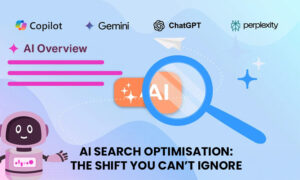
AI search optimisation: the shift you can’t ignore
AI-powered platforms like ChatGPT, Google Gemini, and Microsoft Copilot have changed how users find information. Search is no longer limited to websites; it’s about conversations.
This means your content must be easy for both humans and AI to process. It should be clear, simple, and filled with meaning. AI systems learn from patterns and common-sense logic, so writing that is straightforward and natural performs best.
How featured snippets SEO plays into AEO
Featured snippets are short answers that appear at the top of Google search results. They are highly valuable in AEO because they place your content in front of users first.
To secure a featured snippet, you need to:
- Identify key questions
- Provide short, direct answers
- Use clear formatting such as lists, tables, or definitions
Example:
Q: What is a featured snippet?
A: A featured snippet is a short summary of an answer to a search query, shown at the top of Google’s results.
These snippets not only drive traffic but also establish credibility. Any digital marketing company in the UK that isn’t targeting them is leaving opportunities behind.
Voice search optimisation: talk like a human
Voice assistants are changing how people search. Instead of short phrases, users now ask complete questions.
For example:
- Typed: “best pizza Manchester”
- Spoken: “Where can I get the best pizza in Manchester?”
The difference matters. Your content should reflect natural language and conversational tone. Long-tail keywords and direct Q&A formatting are essential.
Conversational search and content writing
Conversational search is not a trend. It’s the way users now interact with technology. People want helpful answers that sound natural, not robotic.
This means writing in a clear, approachable style. Use contractions, keep sentences short, and avoid jargon. A conversational tone improves engagement and ranking.
What makes a good AEO-optimised page?
- Clear question-and-answer structure
- Easy-to-scan headers
- Concise paragraphs
- Simple, direct language
- Schema markup and structured data
- Visuals that support answers
- Content written with user intent in mind
Common AEO mistakes to avoid
- Overly formal or vague writing
- Ignoring user intent
- Keyword stuffing
- Skipping schema markup
- Forgetting voice search queries
The goal isn’t to write perfect answers. It’s to write useful ones that solve user problems.
How Answer Engine Optimisation(AEO) connects with E-E-A-T
Google prioritises content that shows experience, expertise, authoritativeness, and trustworthiness (E-E-A-T).
AEO supports this because content selected as an answer is seen as credible and reliable. This leads to stronger rankings, better engagement, and lasting authority.
Verdict
In 2025, answer engine optimisation is not just another SEO tactic. It’s the foundation of how users find information, how businesses grow, and how trust is built online.
If you’re a business, AEO is the roadmap to staying visible and relevant. And if you’re a digital marketing agency in the UK, it’s your responsibility to guide clients through this shift with clarity and precision.
At Armada Internet, we help businesses adapt to this new landscape. As a leading digital marketing company in the UK, we focus on AEO, voice search readiness, and content strategies built for the future.
Whether you’re just starting out or improving your current approach, we make sure your brand is positioned as the answer users are searching for.


