
Have you ever launched a campaign, full of hope, only to find it didn’t land the way you imagined? You’re not alone in that. Marketing often feels like a guessing game with seemingly no pattern to match. That’s where data-driven search optimisation comes into play.
Analytics tools help take the guesswork out of marketing and replace it with clear insights you can actually act on. Instead of crossing your fingers and hoping a campaign works, you can see how people are interacting with your website, which messages catch their attention, and where they lose interest. It’s like finally having a map when you’ve been walking blind.
With the right tools, you can track website traffic, follow customer journeys, and see which campaigns deliver real results. Things like heatmaps and A/B testing show you how small changes can make a big difference, while keyword tracking helps you understand what your audience is really searching for.
The best part is that data gives you confidence. You no longer have to wonder if you are spending in the right place or talking to the right people. You can see it in front of you. That means less wasted budget, more focused campaigns, and steady improvements every time you put something new out there.
Why Data-Driven Search Optimisation Matters More Than Ever
Let’s be honest, gut instinct still plays a role in marketing. But on its own, even the sharpest intuition can lead you in the wrong direction. Every business now has access to endless performance metrics: clicks, bounce rates, conversion paths, and full user journeys. The problem is that raw numbers by themselves don’t mean much. Without the right tools, it’s just noise.
This is where data-driven search optimisation makes all the difference. It shifts the focus from surface-level statistics to insights that actually drive growth. Instead of asking “How many people landed on my site?” the real question becomes “Which keywords are bringing in paying customers?” That small change in perspective is what turns data into strategy.
With tighter budgets and more competition, relying on guesswork is simply too risky. Data-driven optimisation isn’t just a way to get ahead anymore. It’s the foundation that helps businesses stay relevant, competitive, and profitable.
Google Analytics: The Cornerstone of Data-Driven SEO Strategies
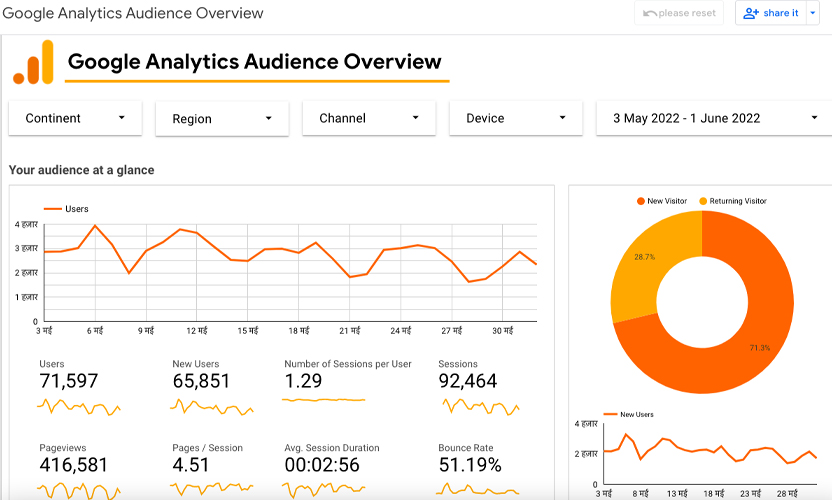
Google Analytics is more than just a traffic counter. When you use it properly, it becomes the backbone of a data-driven SEO strategy. It shows you not only how people arrive at your site but also what they do once they’re there.
Here are a few ways it can shape your strategy:
- Audience insights: Understand who your visitors are, where they’re based, and which devices they use. This helps you tailor content and design for the right people.
- Acquisition reports: See which channels bring in the most valuable traffic. You’ll quickly know whether organic search, paid ads, or social media delivers the best results.
- Behaviour flow: Track how users move through your site. Find the pages that hold attention and the ones that drive people away.
- Landing page performance: Identify which pages spark conversions and which ones need reworking.
- Search queries (with Search Console integration): Discover which keywords bring visitors in and, more importantly, which ones lead to real sales or enquiries.
The value of Google Analytics lies in turning numbers into actions. Instead of making guesses, you can spot patterns, refine your SEO, and focus on strategies that clearly move the needle.
SEMrush: Keyword Power for Data-Driven Marketing Strategies
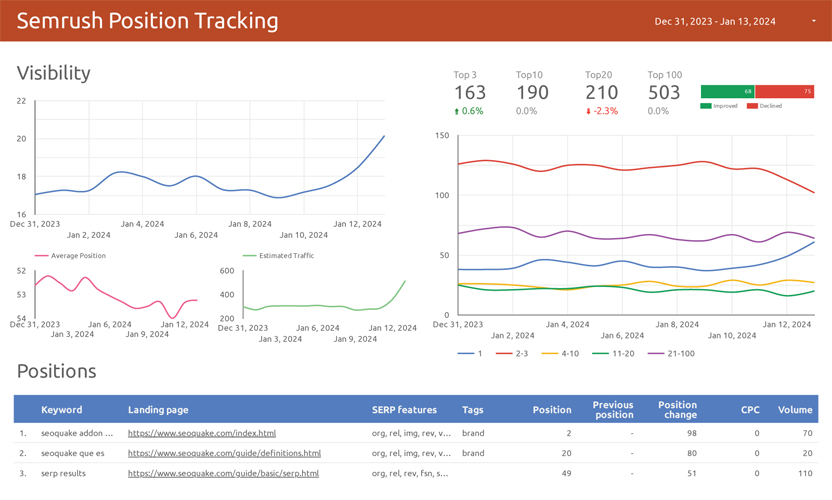
SEMrush is often described as a keyword tool, but in reality it’s much more than that. Think of it as a strategy engine that gives you the insights needed to compete smarter, not harder.
Here’s how SEMrush supports a data-driven approach:
- Keyword research: The Keyword Magic Tool reveals search terms, related queries, and difficulty scores so you can focus on phrases that bring real opportunities.
- Competitor analysis: See which keywords your competitors rank for, what content earns them visibility, and where the gaps lie in your own strategy.
- Backlink insights: Explore backlink profiles to understand where competitors are getting authority and where you could build stronger links.
- Content performance: Track how your pages rank over time and spot opportunities to refresh or expand content.
For example, if your blog posts aren’t ranking, SEMrush helps take the guesswork out of the equation. Instead of wondering why, you can see exactly which phrases competitors are winning with and reshape your content to match or improve on it.
The best part is that SEMrush isn’t limited to seasoned SEO professionals. Its clean interface means even beginners can get started quickly, while still offering enough depth for advanced strategies. The Keyword Magic Tool in particular lives up to its name, giving you a clear direction for building campaigns that are based on data, not assumptions.
Hotjar: Visualising the Human Behind the Data
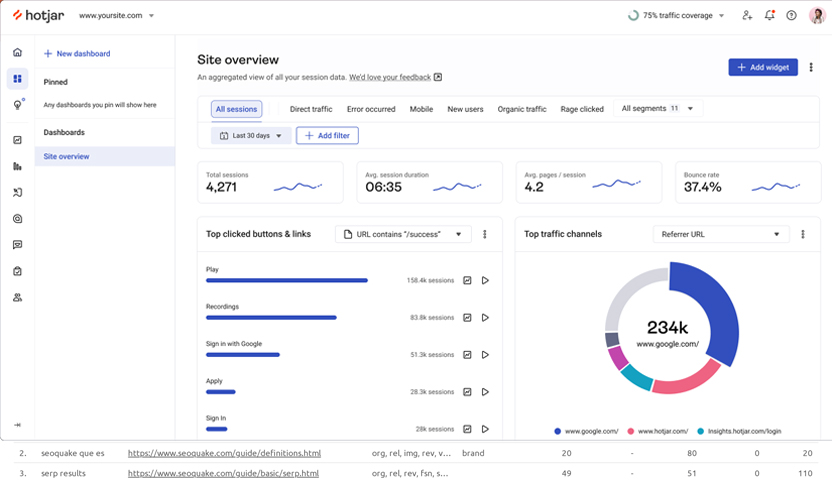
Numbers tell part of the story, but they do not always explain the why. Hotjar fills that gap by showing exactly how people experience your website in real time. With tools such as heatmaps, visitor recordings, and on-page feedback, it reveals the behaviour hidden behind the numbers.
Hotjar helps answer questions like:
- Which areas of a page are being ignored?
- Where are visitors getting stuck?
- Why are people leaving key pages such as checkout or product listings?
This kind of insight goes further than traditional SEO metrics. It is not only about ranking higher on Google, it is about understanding the real people behind the clicks.
For instance, one business found that their “Book Now” button looked too much like an advert. Hotjar showed users skipping it completely. A simple design tweak based on that feedback lifted conversions almost immediately.
Hotjar reminds us that data-driven optimisation is always about people. Every click, scroll, and pause is an opportunity to understand what visitors need and what is preventing them from taking action.
Ahrefs: Deep Dive into Data-Driven SEO Strategies
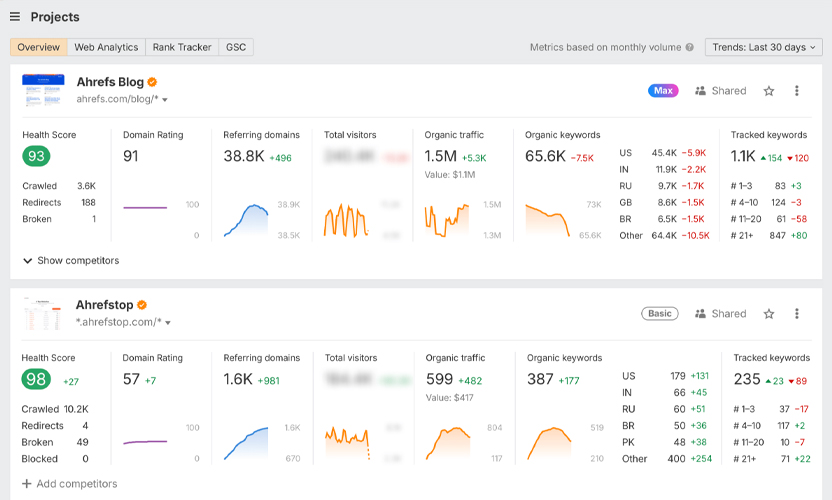
If you are serious about building data-driven SEO strategies, Ahrefs is one of the most powerful tools you can use. It shines when it comes to backlink analysis, competitor research, and uncovering keyword opportunities that might otherwise be missed. One feature that stands out is the Content Gap tool, which shows you exactly which keywords your competitors rank for that you do not.
Here is an example of how that plays out in practice:
We had a product page that was not performing as well as expected. Using Ahrefs, we compared it against three competitor pages. In just a few minutes, we spotted five high-ranking keywords that they were targeting but we were not. We rewrote the page with those keywords in mind, and within two weeks the traffic had increased by 40 percent.
That is the strength of Ahrefs. It does not just present data; it highlights clear opportunities. When you act on those insights, you move beyond guesswork and into strategy that produces real results.
Looker Studio: Making Data Easy to Understand
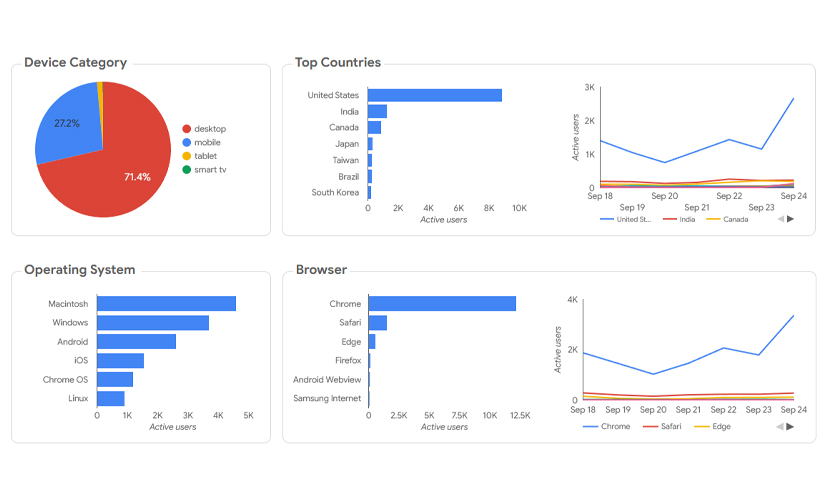
Google’s Looker Studio, previously known as Data Studio, is a reporting tool designed to bring order to overwhelming amounts of data. It connects seamlessly with platforms such as Google Ads, Google Analytics, and Search Console, and it can even transform spreadsheets into easy-to-read visual dashboards.
One of the biggest hurdles in data-driven marketing is making information clear enough for teams to act on. Looker Studio solves this by turning raw numbers into visual stories. For example, you can set up a live dashboard that shows blog performance, ad spend, and bounce rates all in one place.
The real power of Looker Studio is not about adding more data. It is about making sense of the information you already have and presenting it in a way that helps everyone see the bigger picture. It makes analysis collaborative, clear, and actionable.
Moz Pro: SEO Insights with a Human Touch
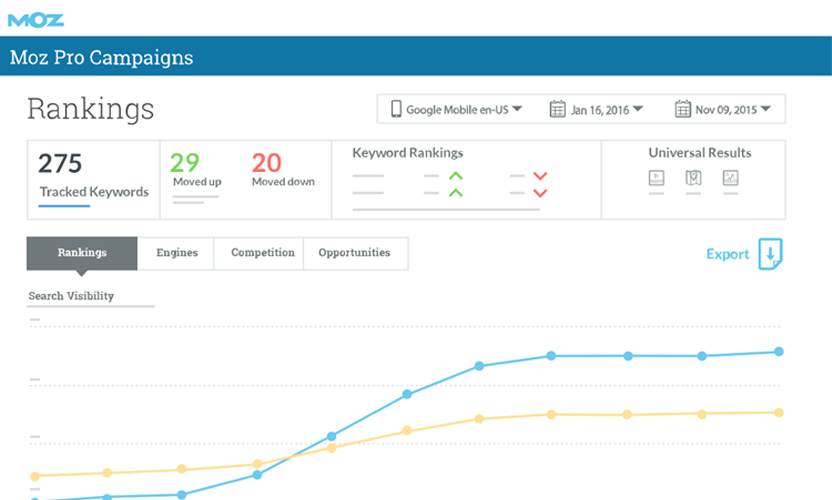
Moz has built its reputation on making SEO feel less overwhelming and more approachable. Moz Pro continues that tradition by offering a complete suite of tools, from site audits and keyword tracking to page optimisation suggestions that are easy to follow.
What makes Moz Pro stand out in data-driven SEO strategies is how it delivers guidance. Instead of overwhelming you with raw metrics, the Page Optimisation tool gives clear, practical recommendations such as:
Improve page load speed
Add your keyword in this section
Strengthen internal linking
It feels less like a complicated tool and more like having a coach by your side. The platform shows you what needs attention and then explains how to fix it in plain language.
That supportive approach is why Moz Pro continues to be a favourite. It brings together the technical side of SEO with an accessible, human touch that helps you act on insights with confidence.
Time-Saving Tip: Use Automation Without Losing Your Voice
Not everything that can be automated should be. Tools such as Zapier and HubSpot workflows are great for saving time, but there is always a risk of sounding robotic.
We once set up an automated follow-up email series for leads. The results were disappointing as open rates dropped. The emails sounded too polished and too stiff. After rewriting the series in a more casual, human tone with a few natural imperfections, open rates jumped by 28 percent.
The lesson is clear. Let automation guide you, but never let it strip away your personality.
Real Talk: When Data Gets Overwhelming
Sometimes the numbers feel like too much. Endless dashboards, charts, and metrics can leave you paralysed. If you have ever felt that way, you are not alone.
The trick is to simplify. Choose three metrics that really matter to your business and focus on those first. At Armada Internet, our Monday check-in always includes:
Organic traffic from search
Conversions from top landing pages
Keyword rankings for our core pages
Everything else is secondary. This small ritual keeps us focused and moving forward without fail.
Where Data Meets Impact
Data only has value when it leads to action. The numbers themselves mean little unless you respond to them. With the right tools in place, data-driven optimisation becomes less of a task and more of a habit.
You do not need a dozen different platforms. You only need the ones that suit your goals, your budget, and the way your business works. Most importantly, stay curious. Let the data guide your decisions while keeping your voice authentic and human.
Looking for Help with Data-Driven Success?
At Armada Internet we work with businesses of every size to unlock the power of data-driven optimisation. Whether you want to grow traffic, increase conversions, or create a stronger long-term strategy, our team is here to support you.
From SEO audits to full-scale implementation, we have helped many businesses turn data into measurable growth.
Let’s make your marketing smarter, together. Get in touch with us today, we are here to help.


